The US-China Tech War and Its Implications for Transatlantic Relations
Abstract
In my thesis, „The US-China Tech War and Its Implications for Transatlantic Relations”, I explore the rising tensions between the United States and China over technological dominance, with a particular focus on the semiconductor industry. I begin by examining the historical context, looking at how China’s rapid industrial growth, driven by initiatives like Made in China 2025, has triggered growing concerns in the West. These concerns include issues like intellectual property theft and forced technology transfers in joint ventures.
I highlight semiconductors as the central battleground in this tech war, explaining the intricate global supply chains that span multiple countries, making them vulnerable to geopolitical conflicts. I detail how the U.S. has responded with policies such as the CHIPS and Science Act to reduce its dependence on Chinese manufacturing and secure its lead in high-tech industries. The European Union, while slower to act, has implemented its own measures, such as the European Chips Act, though it faces challenges related to high labor costs, fragmented markets, and a lack of competitive technology firms.
In the final part of the thesis, I examine how this tech war impacts transatlantic relations, exploring the different approaches taken by the U.S. and EU and the potential for future cooperation or conflict. Ultimately, I argue that this tech war is not just a struggle for economic power but a broader fight for national security and long-term global influence.
I. Introduction
In 1965, Gordon Moore, co-founder and former CEO of Intel, observed that the number of components per integrated circuit doubled yearly. He suggested that this trend would continue for a decade and then would continue with a doubling every two years. While he did not base his prediction on any empirical data, it has since proved correct and is now merely referred to as Moore’s Law. Projections of growth in the microelectronics industry became central topics in the industrial and financial sectors but less so in governance or political science and international relations. Since the fall of the Berlin Wall, officials have been wondering what the new nature of the global order will be. Unipolarity led by the United States was followed by ideas of a multipolar world comprising competing nation-states and local conflicts. Few could predict the rapid proliferation of the microelectronics industry, international trade, and the extent to which computing power and capacity will intertwine all technology and industry in the future, civil or military.
After China transitioned to a market economy starting in the late 1970s and the fall of the Soviet Union, new telecommunication technologies allowed for greater economic cooperation between countries over long distances, leading to a new wave of market liberalization. The West was heading into a post-industrial era, in which most low-added value, especially manufacturing jobs, were outsourced to developing countries. Products of the tech industry became ever more complex, with stages of their production ranging from the mining of resources to design and manufacturing now spanning multiple continents, done by various corporations. Unregulated and following the logic of free market capitalism, global value chains became entangled only guided by the forces of profit maximization. These processes were beneficial for Western nations, which had the advantage of accumulating immense capital and technological development over the past two centuries. Today, on the other hand, the vulnerabilities of an unregulated global industry appear to be increasingly evident when met with an adversarial nation guided by different values.

The People’s Republic of China spent the past four decades gathering Western investment and know-how and has recently shifted its economic strategy from free market-friendly to centrally commanded and highly politically motivated. Carefully planned industrial policy has allowed other non-western nations, including Japan, South Korea, and Taiwan in the past, to close the gap between them and the West. China, albeit decades later, has gone down a similar path. Today, its wealth and political weight far exceed those of its regional competitors. In an ordinary scenario, the current nature of the high-tech industry did not seem to have an effect on the everyday lives of citizens until the COVID-19 pandemic hit the planet in early 2020. As worldwide manufacturing and global trade decreased by a significant margin, the vulnerabilities of Western economies became evident to experts and lawmakers.
Currently, in crisis management, the United States government and the European Union are looking at measures to secure the production of critical technologies. Furthermore, China has already overtaken Western countries in some areas and is an irreplaceable trading partner to both the US and the EU. According to some experts, losing a complete technological advantage over China can be viewed as an existential threat. This fear has caused an immediate deterioration of China-US relations and has consequently put strains on Transatlantic relations as well. The European Union is struggling with many systemic economic problems that make it challenging to settle on the correct policy as it is being pressured by European industry players and officials from Washington.
Are the European Union and the United States on the brink of a paradigm shift regarding economic policy? Can the rise of Chinese companies and the advancement of Chinese technology push Western countries to abandon the free market policies they themselves propagated for decades worldwide? And is the long-standing Transatlantic partnership going to suffer in the process? This thesis will briefly examine the historical background of the US-China tech war and the most relevant sectors that are currently being contested by the two countries. It will also look at the global semiconductor value chain to give a proper understanding of exactly how strenuous it is for lawmakers to navigate such an intricate and vital industry. After that, the thesis will go through the current state of the tech industries and the political climate of both the United States and the European Union and show some of the possible paths forward for policymakers. Finally, it will look at the Transatlantic relations and help understand the obstacles both sides face in order to analyze and manage this current crisis.
II. The US-China Tech War: Background
China, known as the factory of the world, has undoubtedly become the world’s manufacturing superpower in recent decades. In 2019, according to Statista, China was responsible for 28.7% of the global manufacturing output. Many factors have led to this achievement, but one of the most crucial was a decades-long mutually beneficial trade relationship with developed Western nations. This global division of labor was not voluntary on China’s part. Following Mao Zedong’s harsh economic policies, the country lacked capital and human resources for innovation as it slowly transitioned to a market economy during the 1980s. China needed a temporary strategy, and its leader at the time, Deng Xiaoping, was there to provide one. In a speech in 1990, he said: “Observe calmly, secure our position, cope with affairs calmly, hide our capacities and bide our time, be good at maintaining a low profile, and never claim leadership.” This quote is usually understood to mean that China’s continued economic growth relied heavily on the fact that the country did not intend to challenge the Western hegemony of the post-Cold War era, or at least it did not seem to intend to. Since then, the trend of outsourcing manufacturing to China has become the most efficient way for corporations in developed nations to remain competitive in the market. This advantage resulted in a change of trends; technology and human capital were now flowing back to China, with the government heavily supporting the return of experts and professionals from abroad and also establishing so-called high technology development zones.
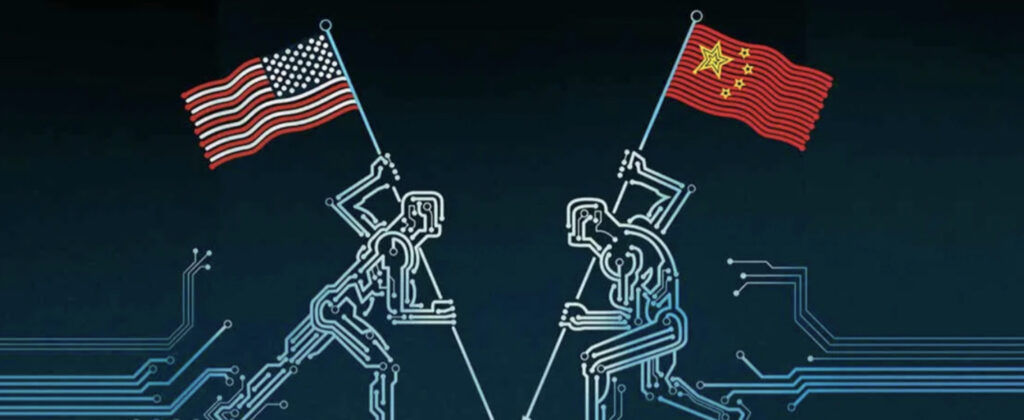
These trends have allowed China to catch up with the West in many areas of technology. Battery manufacturing, telecommunications, and solar power are the most commonly cited. Chinese endpoint manufacturing and the infrastructure relating to it have allowed many Western companies to stay competitive and keep their positions as global industry leaders. American and European companies have become wealthier and more profitable using Chinese labor, but this has not been achieved without cost. The long-standing trade relations between China and the developed world have contributed to a constant transfer of technology, sometimes legal, sometimes illegal, and sometimes in the gray, as Chinese companies have an increasingly higher demand for technology sharing. Western companies have agreed to this ‘deal’ in the past since China has become an irreplaceable part of the global supply chain, not only because of the access to cheap labor but also because of the access for Western companies to the highly proficient and innovative suppliers the Chinese economy can provide. While financially profitable, the relationship between Western governments and Beijing has deteriorated in recent years, with trade being one of the most cited reasons. The technology transfer and rise of Chinese domestic technology giants might cause more significant issues in the future than simple patent infringements and unfair trade practices. Western governments are slowly realizing this growing problem.
II.1. Made In China 2025
In 2015, the Chinese Communist Party (CCP) issued the 13th Five-Year Plan for Economic and Social Development of the People’s Republic of China (PRC) (2016–2020). The 13th Five-Year Plan, besides containing the usual series of social and economic development initiatives, also introduced a national strategic plan and industrial policy called Made in China 2025 (MIC2025). According to the official text, the CCP’s goal can be summarized as follows: “With an emphasis on strengthening the innovative capacity and basic capabilities of manufacturing, we will work to deepen the integration of information technology and manufacturing technology and promote the development of high-end, smart, green, and service-oriented manufacturing to foster a new competitive edge in manufacturing.”
The current general secretary of the Chinese Communist Party, Xi Jinping, introduced a radical shift in economic and potential political strategy with the aforementioned ‘Made in China 2025’ plan. Instead of mass manufacturing cheap, low-quality goods, the new Chinese approach transforms the country’s industry into an innovation powerhouse that can compete in all key high-tech industries with the most developed Western nations. The main sectors the policy targets are next-generation information technology, high-end digital control machine tools and robotics, aerospace and aeronautic equipment, oceanographic engineering equipment and high-technology shipping, advanced rail transportation equipment, energy-efficient and new energy automobiles, electric power equipment, agricultural machinery and equipment, new materials, and bio-pharmaceuticals and high-performance medical equipment.
This new economic strategy is not mainly driven by hubris, for the world’s longest-standing continuous civilization to finally take its rightful place as the most advanced, most prosperous nation on the planet. In the coming years of the AI revolution and amidst the increasing importance of cyberwarfare, having a self-reliant tech industry is becoming a cornerstone of a successful security policy.
II.2. Western Concerns
These ambitious plans drew some immediate criticism from China’s trading partners. Experts quickly realized that a technological leap of this magnitude would have enormous implications for Chinese trade practices and threaten the standing of many industry-leading Western corporations. Some of the main concerns include substantial government subsidies for Chinese firms, Chinese investments into and acquisitions of foreign companies, and the coercing of foreign companies into joint ventures and transfer agreements. Chinese investment in American companies was highest in 2016, amounting to $45 billion. China will not have an easy time reaching and surpassing the technological advancement of some leading US, EU, Japanese, Korean, and Taiwanese companies. This still-existing gap is the main reason both politicians and experts saw a coming proliferation of intellectual property theft and unfair trade practices.
Concerns are grounded in previous experiences of the last decade. The National Medium and Long Term Plan for Science and Technology (2006–2020) (MLP) served as a precursor to the Made in China 2025 strategy. In this plan, the Chinese government committed to allocating 2.5 percent of its GDP, specifically to research and development in areas considered crucial for the country’s future economic prosperity and national security. The MLP, by the 2020s, has already achieved a significant increase in innovative capability, with the ranking of the country in the Global Innovation Index rising from 29th place in 2007 to 14th in 2020. Effects of similar plans can already be seen in several industries. The manufacturing of plug-in electric vehicles (PEVs) was one of the earliest goals of the Chinese “frog leap” policy, and with massive R&D programs, 15 billion USD was poured into a national electric vehicle policy by the Ministry of Industry and Information Technology.
China, under the Golden Sun 2009 program, went on to subsidize 50% of the investment cost of solar panel demonstration projects and 70% of the investment cost for off-grid solar panels. The effects were an immediate proliferation of domestic solar panel production and increased solar power output. One of the most notable milestones was when China overtook Germany in solar capacity in 2016 when the country’s photovoltaic solar capacity reached 43 gigawatts. Now, according to experts, China will be responsible for more than 80% of the world’s solar manufacturing capacity by 2026.
Implementing the ‘Made in China 2025’ economic strategy will nonetheless face many challenges. There is an idea of advancing market economy reform, which aims to decentralize the state’s role in national economic development and change China’s economy such that it is predominantly driven by the market rather than the state. Despite the push for marketization, elements of a command economy have resurfaced extensively in China, including ad hoc interference by the state at various levels.
A similarly ambitious plan from China, the Belt and Road Initiative (BRI), has advanced remarkably thanks to state and state-owned enterprise (SOE) funding. Still, this project runs the risk of igniting a severe financial crisis. China’s economic growth has not been much aided by industrial capacity collaboration through the Belt and Road Initiative over the last six years. China is prone to issue centrally planned large-scale economic strategies that have no guarantee of being profitable or aren’t necessarily flexible enough to follow rapidly changing trends in the global economy and the technology sector.
III. Semiconductor Manufacturing
The production of microchips, such as central processing units (CPUs) and graphics processing units (GPUs), is the main battlefield for the current technological war. Microchips and integrated circuits are used in all devices that have computing capabilities. This widespread use of microchips means that a nation’s own domestic tech industry will be heavily reliant on the level of sophistication in microchip technology it has access to, either through domestic production or trade. Regarding encryption technology, processing power is directly linked to the speed and efficiency of the process. Currently, the most advanced generative AI technology and software using machine learning is mainly trained on high-tech GPUs. When countries compete to own an ever more prominent part of the semiconductor supply chains, it is not only a race for increasing one’s economic output but is also a question of national security. The key nations and areas involved in semiconductors’ design, fabrication, assembly, testing, and packaging include the United States, South Korea, Europe, Japan, Taiwan, and China. Sales of semiconductors totaled $412.3 billion in 2019, with logic and memory chips accounting for the majority of the market. The manufacturing of semiconductors is rarely conducted by one company alone. The supply chain consists of several steps ranging from designing the chip’s basic functionality to manufacturing, and it takes place in several countries across multiple continents.

In 2020, after the COVID-19 pandemic hit production supply chains worldwide, an economic recession was not the only crisis the Western nations had to deal with. Since the pandemic originated in China, Chinese overseas trade was quickly and severely affected, and so was the Chinese domestic manufacturing output of various industries. One of the most notable shortages of the pandemic era was the semiconductor shortage, which affected many key sectors heavily reliant on a steady supply of microchips. The shortage caused by broken supply chains and the following recession has exposed a key vulnerability in US and Western national security. While the US is the leader in designing industry-leading microchips, its lack of manufacturing capabilities exposes it to threats in case of a trade war with China or a pandemic-like event that can even cut it off from its key allies specialized in manufacturing like Taiwan or South Korea.
In the following chapters, it is crucial to give a detailed description of how most industry-standard microchips are produced. Showcasing the key steps and key players of the process is necessary to be able to understand why the production of high-end microchips is such a long and convoluted process for a single nation-state and why being caught in the middle of a trade war can potentially set a country like China back in years of technological advancement.
III.1. Instruction Set Architecture
First, there are companies that issue instruction set architectures (ISA). The ISA defines instructions for managing the fundamental features of the machine code running on the chip itself, also known as the implementation. These standardized architectures allow for interoperability between systems while still providing the possibility of various products with different characteristics. There are many types of ISA, but by far, the most commonly used are x86 for personal computers and cloud servers and ARM for mobile devices. x86 was initially developed by Intel in the 1970s, and its license is currently used by three companies worldwide: Intel, AMD, and Via Technologies. Of the three, the two American companies, Intel and AMD, are the only ones able to design chips at the most advanced level. A license was only given to the Taiwanese Via Technologies because the United States government considered Intel’s position to not be in accordance with anti-trust legislation. ARM architecture is an ISA created by Arm Holdings, a British company that only went public in 2023. Almost all mobile phone chipsets use the ARM ISA. Arm Holdings provides licenses to multiple companies that want to design chipsets based on its architecture but are still ultimately in control of its intellectual property.
Another important ISA is the RISC-V, invented at the University of California, Berkeley, ten years ago. RISC-V is famously open-source and is gaining popularity for this very reason. While many companies are experimenting with producing microchips and chip modules using RISK-V, these chips are being developed for processes nowhere near as complex as the ones running on chips using the ‘big two’ ISAs, nor do they have a market as significant. Not to mention, the transition of complex operating systems, such as Microsoft’s Windows or Apple’s MacOS, from one ISA to another can take years. Manufacturers worldwide depend on having access to specific ISA licenses since large operating systems and the companies that develop them influence the market demand. RISK-V, therefore, is not likely to join the ‘big two’ as the new most popular ISA anytime soon. An open-source ISA that every company can use is also not in the best interests of countries whose companies have already issued the most used ISAs. In October 2023, Reuter reported that US lawmakers are pressuring the Biden administration to regulate the development of RISK-V hardware by American companies because of the ISA’s popularity in China. This rising pressure is another step in the proliferating tech war between the US and China, which shows a standard method of the US using its preexisting technological advantage and patents to have an upper hand over Chinese technology. Unsurprisingly, companies are primarily interested in their bottom line and less so in national security and international cooperation. In a blog post in October 2023, Google announced plans to develop its Android operating system to run on RISK-V, not just ARM.
III.2. Chip Design
The overall arrangement of memories, circuit diagrams, and cores of the microchips comes after settling on what ISA to use. Companies like Intel own licenses to popular ISAs and design and manufacture their own microchips. But that is rarely the case in the industry. Most companies design the chips based on a licensed ISA and have a manufacturer make it in their fabricators, also known as fabs. These are usually called fabless companies like Microsoft, Apple, Google, Nvidia, Amazon, and Qualcomm. The current trend in chip manufacturing is that companies either split the manufacturing branch off of their business or outsource manufacturing entirely to be able to focus on design entirely. While R&D was not directly outsourced, this model still led to a significant spillover of technology and know-how. Whether a company can design high-end semiconductors depends not only on the expertise of its engineers but also on the fabs it can contract to produce its designs.
III.3. Chip Fabrication
Separating design and contract manufacturing is efficient because of the economy of scale. Large foundries can pull orders from many sources and focus solely on manufacturing. The cost of equipment and R&D necessary for manufacturing high-end chips is so high that the industry leader in fabrication, Taiwanese TSMC, spent $28 billion on capital expenditure, more than half of its annual revenue, with 80% of that amount going to the company’s three most advanced chip production technologies. This amount simply cannot be matched by other companies. The foundry that was second in revenue in 2017, multinational contract manufacturing company GlobalFoundries had to stop manufacturing chips based on the 7-nanometer process, a highly advanced technology, in 2018 since it was no longer financially viable.
In the semiconductor manufacturing industry, neither the volume nor the quality of manufactured products is distributed equally among companies. Taiwanese TSMC has been responsible for over half of the global market share for many years now, with South Korean Samsung Foundry being second in 2023, followed by Taiwanese UMC, multinational US-based GlobalFoundries being fourth, and Chinese SMIC being fifth with 6% market share. Regarding silicon fabrication, US-allied South Korea and Taiwan are the key players. Not only do their companies make most microchips by volume, but their competitors simply don’t have access to technology on a level as advanced. Shanghai-based SMIC is a Chinese state-owned semiconductor foundry. SMIC was founded to mimic the Taiwanese mass semiconductor manufacturing model and was even fined in 2009 by a US judge for stealing trade secrets from TSMC for $175 million. For China to have access to the most advanced semiconductors, it must contract foreign foundries in countries closely allied to the West, an endeavor getting increasingly difficult in today’s worsening climate between China and the US. An interesting news article in late 2023 reported that Huawei would release next year’s smartphones with domestically manufactured 5-nanometer chipsets. Soon, in early 2024, reports, however, surfaced that the so-called new Chinese 5 nanometer chips were, in fact, produced in 2020 by Taiwanese TSMC, just before US sanctions made such a collaboration impossible.
The ‘Made In China 2025’ plan clearly states that China intends to both design and manufacture the most advanced chips in the world soon. The US has already taken action to prevent Chinese companies from accessing the most advanced manufacturing technologies. A notable example is the U.S. Department of Commerce banning exports of semiconductors made by TSMC to Huawei, which was the world’s second smartphone maker by units sold, after the Taiwanese firm announced plans to build a US-based plant. The United States clearly has the means to prevent China from accessing the latest cutting-edge foreign technology. The PRC needs to boost its domestic production and develop the technology necessary for high-end manufacturing if it does not want to be starved of advanced semiconductors by the United States; for this, China needs access to the most advanced equipment as well.
III.4. Lithography
The technology needed to produce the most advanced semiconductors in the world is not provided by the companies that operate the foundries that produce such implementations. The machines used to create silicon wafers with specific designs are called lithography systems, and the process is called lithography, or more accurately, microlithography. The most common method is called photolithography, where light, sometimes X-ray, but most commonly ultraviolet (UV) light, is used to print the pattern of the chip design onto a silicon wafer. Companies that manufacture lithography systems have to work together with companies specialized in optoelectronics that provide the optical components for lasers used in lithography systems and the necessary optics for lithography that form the key component of the wafer scanner used for the printing process. Nanoimprinting is another technology that can potentially be used to manufacture semiconductors at the 5nm process.
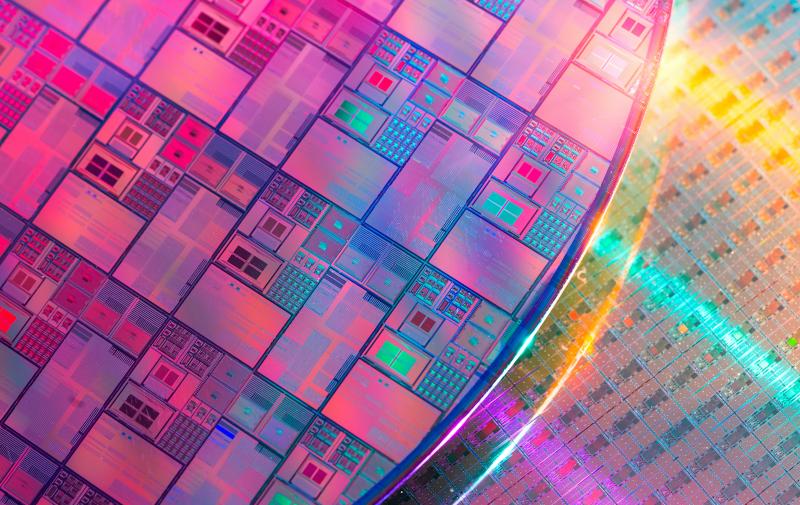
The method to produce the most advanced microchips in the world using the 5nm and 3nm process is called extreme ultraviolet lithography (EUV). The only company that can produce commercially available EUV systems as of March 2024 is Dutch ASML Holding. ASML was never allowed to sell EUV systems to China, based on Dutch and American restrictions, but the US has also pressured the Dutch government to halt sales of less advanced machines called deep ultraviolet lithography (DUV) systems, which had parts manufactured in the United States. A current ban on DUV systems was going to be lifted in 2024, with the Dutch company even preparing shipments of new machines to China, but according to Bloomberg, these were canceled after pressure from the Biden administration. The US government’s efforts to keep China several generations behind the highest technology levels target the manufacturing process of semiconductors at all stages.
One of the main components of photolithography systems is the optics used for the printing process. The leading supplier of ASML’s machines is yet another European company, Carl Zeiss. The newest wave of pressures to tighten restrictions on exports to China also includes the German optoelectronics company, and manufacturers are required to have a valid license in order to repair and service lithography systems previously sold to China. Another way to manufacture microchips that are as advanced as those manufactured using the EUV process is by nanoimprinting. Nanoimprinting is currently being researched, and the Japanese company Canon claims that it will be the first to sell semiconductors made by nanoimprinting that are equivalent to those produced by the 5nm process.
III.5. Successes of US “Detainment” Policy
It is important to note here that while many news articles have been released lately about China catching up to the US in semiconductor manufacturing, the post-pandemic policy of keeping Chinese high-end tech several generations behind that of the United States did have short-term successes. The United States controls the most popular licenses for selling microchips used in most commercially available systems. The most advanced semiconductors in the world are designed by US firms like Apple, Nvidia, Intel, and Qualcomm not only because of the know-how available but also because the technology required to manufacture such implementations can currently only be supplied by companies from Europe, South Korea, Japan, and Taiwan. The US has formally, through the Bureau of Industry and Security under the US Department of Commerce and informally using diplomacy, applied pressure on its allies to halt shipments of microchips, machines, and export of technology to the People’s Republic of China and also banned its own citizens from taking critical jobs in Chinese companies cutting it off from the technology and know-how it needs to close the still existing gap.
The United States has been openly on the offensive ever since the Trump administration decided to blacklist Huawei back in 2019. Huawei, once one of the largest buyers of electronic components, is continuously starved of US-made semiconductors as further restrictions were introduced in 2022, and sales from US companies like Intel and AMD are caught up in an intentionally bureaucratic government approval process.
IV. Current US Economic Policy
While sanctions and applying pressure on allies had short-term effects on the Chinese semiconductor industry, these are no long-term solutions for the US to secure its current lead on China. Similarly to the EV or solar power industry previously mentioned, semiconductor, AI, or biotech industries can also experience rapid development provided the tremendous amounts of funding the CCP is willing to pour into R&D and pulling in talent. While some of the success stories turn out to be false information, some, like SMIC being able to mass produce 7nm chips for Huawei, prove that the Chinese company has access to not only new domestically developed technologies but also to foreign-made machines while somehow circumventing restrictions.
One of the main reasons why Chinese technological advancement seems so hard to halt and can surprise Western industry experts time and time again is that Chinese government-funded R&D and massive subsidies integrate perfectly with the already existing manufacturing industry that is still funded by a vast influx of foreign capital. The Chinese manufacturing industry also provides a substantial market for domestic innovative companies competing to be the global market leader. In China, there is demand for domestically designed high-tech products. Therefore, the rapid development of domestically researched and produced technology is not driven by the inefficient bureaucracy of a planned economy but rather by simple market logic directed by a need for a self-reliant economy and national security. This points to the apparent solution for the United States and its allies to prevent China from overtaking as the lead technological innovator of the planet. The new US and EU economic policy should also work towards building domestic industries and markets to drive innovation in a race with China that is ever-tightening. What is being done and whether it is sufficient and can be an actual long-term solution to the tech war will be discussed in this chapter.
IV.1. CHIPS and Science Act
Regarding the research and production of highly advanced technologies, government funding usually appears to support the backbone of a thriving sector. Similarly to the CCP, the United States government has realized that market practices will not work in the US’s favor if not all global players follow the same rules. Come the summer of 2022, a bipartisan bill was signed into law by President Joe Biden to provide roughly $52 billion in government funding for research and manufacturing of semiconductors and related fields such as STEM education, cybersecurity, and artificial intelligence.
The primary way the bill helps boost domestic manufacturing is by authorizing a $20 billion budget for the National Science Foundation (NSF) for working on translational science. The new mission of the NSF thus will be to not only overview the research in critical areas of technology but to help channel the research into an actual self-sustaining manufacturing industry. The areas the bill mentions are artificial intelligence,
high-performance computing, quantum technology, advanced manufacturing, disaster prevention, advanced communications, cybersecurity, biotech, advanced energy efficiency, and materials science. These fields, not surprisingly, have a significant overlap with the fields mentioned in the Made in China 2025 economic strategy within the 13th Five-year Plan of the People’s Republic of China. It is important to note that MIC2025 was introduced in 2015 while the CHIPS and Science Act was passed in 2022, showcasing how this enormous government incentive from the United States government has most likely been influenced by the aggressive Chinese economic policy and can also be understood as a reaction to that.
Besides traditional government subsidies, the CHIPS and Science Act has multiple ways to provide capital and technology for the semiconductor manufacturing industry. There is a 25% tax credit for investing in semiconductor manufacturing and necessary equipment, and the bill also allocates $11 billion in funding for the National Semiconductor Technology Center (NSTC). The role of the NSTC as a private-public consortium is to encompass all players of the semiconductor ecosystem, including the US government, research facilities, universities, and private corporations. At this point, it is clear that the CHIPS and Science Act is not merely aimed at boosting the US economy in a stage of post-COVID stagnation, but it is a long-term plan to secure the US’s place as the world’s leading technology research power, a position it held ever since World War II. However, ensuring the technological advantage is becoming increasingly complex if China invests billions into its own R&D. It is heavily relied upon by the US and the EU when it manufactures the West’s intellectual property.
IV.2. Increasingly Hostile US-China Relations
On the 15th of May 2019, the United States Department of Commerce’s Bureau of Industry and Security added Chinese tech giant Huawei to its trade restrictions list called the Entity List. The reasoning by the bureau was that “( . . . ) Huawei has been involved in activities contrary to the national security or foreign policy interests of the United States.” The news swept through the international tech industry as adding the Chinese company to the restriction list was essentially banned from doing business with any organization operating in the United States. This did not only ban the sale of hardware to Huawei from the likes of Intel or Qualcomm, American companies the Chinese smartphone maker heavily relied upon in order to offer market-leading high-end smartphones, but also banned Huawei from using Google’s Android operating system on its smartphones. While a hardware ban can make it difficult for a company to redesign its planned future hardware and reestablish supply chains for large-scale production, the complete ban on Huawei, which relied heavily on Android to support its smartphones, was unprecedented in the sense of the scale of production it has affected as Huawei sold more 240 million smartphones in 2019 all running Android. The most common speculation behind the ban is that Huawei, which has close ties to the Chinese government and deals with the installations of 5G networks in multiple countries around the world, could use its position as one of the largest and most proficient telecommunication companies in the world to install surveillance hardware in foreign nations’ 5G networks. This, of course, is not very likely to happen, according to experts. There are apparent differences between the goals of the Chinese government and Huawei as a private company. While we cannot be sure that the CCP could not apply enough pressure on Huawei for the company to serve the Chinese national interest, there is no reason to assume that the company would risk getting exposed and sanctioned for espionage, potentially threatening its whole business. Therefore, such a serious move from the Trump administration points to a larger strategy regarding Chinese tech firms.
Along with the Huawei ban, there was another sanction in 2017 on partly state-owned Chinese technology company ZTE for illegally exporting technology to Iran. These were early signs of a proliferation of hostile attitudes towards China on the United States’ part. It swiftly became apparent that Washington never intended to wage this war on its own. Cybersecurity has always been an international issue that requires cooperation, but when it comes to tensions between China and the United States, all other countries must tread very carefully. US allies in the region, like Japan and Australia, were quick to join the decoupling of Huawei from the global supply chain, while others, like South Korea, reacted in a relatively moderate fashion, wanting to avoid a direct confrontation with Beijing. The fact that 21st century supply chains in telecommunications and semiconductor manufacturing are complex and intertwined to a significant extent makes the tech war a delicate endeavor, where either side could quickly find itself at a disadvantage if its policies contradict national economic interests to a substantial degree. The US is still in a comfortable position when it comes to targeting individual Chinese companies, issuing bans on companies with ties to China’s military, or banning its own companies like Amazon, Google, or Microsoft from selling their AI-related cloud computing services to Chinese customers.
Another thorn in the side of US legislators for a long time was the Chinese social media platform TikTok. TikTok and its parent company, ByteDance, were cited as a security concern for a while before a wave of legislation hit the company in 2023. TikTok was first banned on government devices with the No TikTok on United States Devices Act and then strongly incentivized to be banned by universities as the Terminate TikTok on Campus Act of 2023 would void higher education institutions of federal funding if they did not comply. Still, legislators remained concerned that the United States government would not have a way to monitor how TikTok stores the data of its US users, so in March of 2024, the US House of Congress finally passed a bill on the 23rd of April 2024 that would essentially ban the company from operating in the States after 12 months if it remains in the ownership of Chinese ByteDance.
IV.3. The Rise of Techno-Nationalism
The changing Chinese and American economic policies regarding cybersecurity, R&D, and manufacturing affect the entire geopolitical landscape. So far, this thesis summarized how the United States has quickly and seemingly effectively applied pressure on its domestic companies and foreign allies to starve the PRC of the most advanced technology and machinery it needs to close that gap between Western and Chinese companies and how the United States government is trying to boost its own economy to reverse the decades-long practice of outsourcing manufacturing, especially in high-tech industries. This trend can be described with the term “techno-nationalism”. The techno-nationalist attitude was present for quite some time in China, given the country’s history filled with occupations and humiliating defeats by foreign nations using much more advanced military technology. Unlike the Qing Dynasty, the People’s Republic of China is a modern, developed nation, currently within arm’s reach of being the world leader in innovation and science.
China’s rapid growth and development could be ascribed to Western economies’, especially in the United States’ overdependence on neoliberal economic policy. Today, we know that neoliberal economic policy helps ensure an uneven pace of development amongst nations and significant dependence on the First World for developing nations if there is a wide gap between the developed and developing countries, and long-term political stability only exists in the former. Using this logic, many Western countries abandoned industrial policy during the 1980s and relied on the free market for development and to ensure their advantage. President Trump has famously identified an issue with US-China trade relations when he made anti-China sentiment a cornerstone of his 2016 presidential campaign. The Trump Administration has imposed tariffs on many Chinese goods, including aluminum and steel. It has also addressed imports of solar panels after an investigation into China’s unfair trade practices and also used Section 301 of the Trade Act of 1974 multiple times to impose further tariffs despite it not being a standard procedure since the US joined the World Trade Organization. Many have criticized President Trump for needlessly inducing a trade war with China. Current president, Joe Biden, instead criticized him for not putting enough emphasis on strengthening the US economy in the face of the Chinese challenge.
President Biden’s approach to the economy is very much in line with his criticism of Trump’s handling of China. Joe Biden has repeatedly shown his dedication to rebuilding US manufacturing, including supporting union efforts of American autoworkers and the signing of the Inflation Reduction Act and CHIPS and Science Act. The New York Magazine has even famously declared in the spring of 2023 that “The Biden Administration Just Declared the Death of Neoliberalism.” This article title might be a result of editorial exaggeration, but for some experts, even the current trend of rising protectionism and the increasing focus on industrial policy is insufficient.
Protectionism, both in terms of subsidizing whole industries and protecting domestic markets, has not only been the standard in China for over a decade, but it is done to an unrivaled extent. Suppose the tremendous growth of the Chinese solar, battery, and telecommunications industries is due to the purposeful creation of a robust domestic market and significant upfront investment in sectors with marginal returns. In that case, it begs the question of whether this growth can be replicated in the US with mere credit subsidies and unilateral sanctions. Some believe free market trends will take care of efficiency, but it is difficult to win a rigged race. For those who think protecting a competitive edge in high-tech industries has already become a requirement for basic national security and self-preservation, the solution lies in a much more comprehensively coordinated multilateral market pooling effort leveraging the West’s collective market power to rid both the US and its allies of an increasing reliance on the Chinese market. This endeavor could be the beginning of an overall paradigm shift in US economic policy that will indeed have a significant impact on the European Union and the US’s East Asian allies as well.
V. Current EU Economic Policy
The current restructuring of global value chains and the increasing intensity of hostile trade practices have turned the state of the world into what can be described as “techno-geopolitical uncertainty.” What this new playing field means for Europe is unclear at the moment, and there are varying views regarding the proliferation of the tech war. The European tech sector has undergone structural changes in the 21st century. Most of these changes were large sales of once renowned consumer electronic brands or divisions to East Asian or American companies and a refocusing on high-end non-consumer electronics industries such as healthcare technology and telecommunications.
Ericsson sold its share of Sony Ericsson, a joint venture with Sony making competitive cellphones and later smartphones to Sony in 2012 and currently focuses solely on information and communication technology. Philips sold its audio and video operation to Japan’s Funai Electric Co. in 2013 and sold its brand called wOOx Technology to American company Gibson in 2014. In 2021, Philips sold its Domestic Appliances division to Hillhouse Capital, a private equity firm with most of its offices located in East Asia, and is now primarily in the health technology business. The Finnish brand Nokia sold its mobile phone business to Microsoft in 2014 after famously failing to adapt to the quickly changing smartphone market. It lost its once significant market share to American, Japanese, and South Korean firms. After Microsoft was also forced out of the smartphone market, a brand new Finnish firm called HMD Global bought back the Nokia brand in 2016 and continues to produce smartphones and classic cell phones, partnering with the Nokia Corporation. HMD Global, with its roughly 700 employees, is the world’s 13th most valuable smartphone company according to Yahoo Finance, with around 0.49% market share. While HMD surprised many skeptics by managing to stay afloat in such a competitive and innovative market, its relative success is not tied to producing the most advanced market-leading flagship devices but is instead the result of targeting an alternative group of consumers who want affordable and reliable devices that provide a comfortable user experience.
These examples show that while European tech companies are still world-leading in terms of quality and reliability, the services and products have been reduced to highly specialized fields that are typically non-consumer related. This would not be a problem in and of itself. However, these less competitive fields, which rely more heavily on decades’ worth of know-how gathered and the still existing trust in the quality of European-made technology, will not require such a constant need for innovation that fuels hubs of high-tech research around the world, similar to Silicon Valley or Shenzhen. During the 21st century, Philips has steadily scaled down the famous Dutch section of its research department, Philips Natuurkundig Laboratorium or NetLab. NetLab, in the 20th century, was responsible for developing technologies such as the cassette tape and the compact disk. In an interview in 2010, Elwin de Valk, the director of the accessories department of the Consumer Lifestyle division of Philips, proclaimed that “We are no longer a high-tech company, ( . . . )” referring to the company abandoning fundamental research aimed at product development through new technologies.
V.1. The Causes Behind a Struggling European Tech Sector
The tendencies we can identify in Europe were similar to those seen in North America in recent decades. Access to cheap labor offered by globalization has caused manufacturing outsourcing in many industries. Like the United States, the European Union relies heavily on the expertise of East Asian manufacturing companies, which provide both unmatched services in terms of infrastructure and labor costs and a customer base for Europe’s highly advanced companies developing and manufacturing the necessary technology for semiconductor mass production.
While tendencies in the United States and the European Union may be similar in manufacturing, the overall tech sectors of the two have huge discrepancies. Earlier, the thesis talked about the steps in the global value chains of semiconductor manufacturing. Of all the steps, chip design, engineering, and ownership of the microchips’s composition has the highest added value. Almost all the companies responsible for designing high-end semiconductors are from the United States. This way, the American tech sector remains highly valuable with large profits even in a post-industrial economy. The European supply chains are highly fragmented. Europe’s most valuable semiconductor company, ASML, does not design nor manufacture semiconductors, and its machines are mainly sold to East Asian countries, where they produce locally designed or American microchips.
The engineering of advanced chipsets, computer hardware, and smartphones requires top-of-the-line STEM education, a competitive startup environment, and a conducive investment climate. The primary issue that represents the root cause of Europe’s disadvantageous competitiveness is the lack of rapid-growth new technology-based firms (NTBFs), a problem the European Commission has recognized a long time ago. In Europe, regulations make turning high-end research into commercially successful businesses a difficult endeavor. The European Union has already made efforts to adopt a heuristic firm growth model that would allow NTBFs to access sources of private external financing more easily. These issues differ extensively from the ones faced by the high-tech industry in North America. American tech stocks consistently outperform their European counterparts, and there is a twentyfold difference between the value of the top 7 companies from each continent. Still, a self-sustaining microelectronics industry has unusually many stages in the production chain that need to be secured to weed out all vulnerabilities stemming from potential future production shortages. One of the primary challenges developed Western nations, and therefore the European Union as well, have to face is the establishment of profitable domestic manufacturing of technologies that supply their current leading industries.
Efficient manufacturing requires cheap labor, substantial government incentives, and a robust central administration to implement long-term strategy and restrictions on free trade, similar to how the East Asian model was implemented in the second half of the 20th century. In Europe, labor costs are the highest in the world, according to the International Labour Organization’s data. Labor cost is not the only metric that makes it challenging to replace Chinese manufacturing with a robust European manufacturing industry, which puts the European Union at a disadvantage in trade with China.
The other substantial reason is the export potential of Europe and the US in the face of manipulative Chinese monetary policy. During his 2016 presidential campaign, then-candidate Donald Trump promised to bring manufacturing jobs back to America. Experts were skeptical, pointing at now apparent structural problems with the rejuvenation of the North American manufacturing industry. The increasing value of the US dollar makes the ever-growing US trade deficit an issue that cannot be solved with simple trade deals with Mexico or China, and transitioning to a more export-reliant economic model doesn’t seem more achievable now than it did eight years ago. Similarly, in Europe, China’s largest trading partner, the trade deficit with China was at an all-time high in 2022, with a slight decrease in the following year. The Chinese policy of devaluing the CNY makes the reduction of the trade deficit a challenge that is difficult to tackle.
While there is not such a significant overall difference between the GDP of the United States, China, and the European Union, the former two have many more reasons to compete for dominance in vital technological areas than mere economic advantage over one another. Similarly to the United States, when the COVID-19 pandemic shut down most production worldwide, European countries had to realize that there were problems with the continent’s overall security.
V.2. European Chips Act
Europe came late to the game when compared to the United States. The wave of legislation in 2022, like the Inflation Reduction Act, had to wait another year in Europe. It was first announced in February of 2022 by the President of the European Commission, Ursula von der Leyen, and was approved by the European Parliament a year later. The president identified the midterm goal of the act as to “(…) make Europe an industrial leader in this very strategic market.” The European Chips Act will “(…) mobilize more than €43 billion of public and private investments and set measures to prepare, anticipate and swiftly respond to any future supply chain disruptions, together with Member States and our international partners.”, according to the official EU text. The implications are that besides funneling the funds towards building manufacturing capacity, a monitoring system will also be implemented to warn against future supply chain disruption.
It is important to note that the European Chips Act authorizes significantly less funds than the CHIPS and Science Act, which is also complemented by the Inflation Reduction Act. Still, many other differences point to different strategic objectives as well. The European Chips Act targets most of the critical areas that the continent is lacking in, for example, support for startups, investment in next-gen technologies, and an investor-friendly framework by offering subsidies in manufacturing and boosting innovation through focusing on talent and education. The main goal of both acts is to reduce the overall Taiwanese and South Korean share of global manufacturing capacity, which is currently over 80%, by boosting manufacturing in the EU and the U.S. One of the main issues the European Union is going to face when it comes to boosting manufacturing, is the previously discussed lack of companies with state of the art chip design capabilities. Although Europe once was the global center of innovation in microelectronics, it will be a challenging endeavor to catch up with North American and East Asian companies that have booming tech industries. Current EU policy is undoubtedly still primarily focused on research rather than the commercialization of end products, a task that is way more complicated than pouring money into R&D and educational facilities and requires an overall reestablishment of industrial policy in the continent that focuses on the complete semiconductor value chain. In an article published in the Science and Public Policy journal, researchers conducted interviews with “key informants within the European semiconductor industry” who were agreeing with what the data was suggesting:
“Europe is tech-savvy. We have top-notch researchers, top-notch research infrastructures, and great universities. The problem is transforming that capability into business, and for the last three decades, when digital really started as an activity, I guess Europe has missed two major waves.”
“Europe is pushing far too much money into research programmes and far too little into business development programmes. And to some extent, the excuse for that always seems to be that you cannot state-fund technologies or innovations that are too close to market because that would be disturbing the market.”
Removing China and other East Asian countries from the supply chain cannot be easily done or even achieved in the near future. Not only because of the entanglement of supply chains but also because of similar efforts from China and the United States. As both countries push for semiconductor autonomy, Europe is at risk of being completely sidelined in the competition that is already referred to as the US-China tech war. Currently, the major steps and goals are becoming more evident. An autonomous microelectronics industry is essential for national security, but achieving it is a slow and tedious process of deglobalization of manufacturing, significant upfront capital investment, and a solid and long-term industrial policy tying it all together. These are all apparent challenges for the European Union, which has always struggled to coordinate continent-wide and national economic policies and has preferred substantial market liberalization.
V.3. From Strategic Autonomy to Digital Sovereignty
The word ‘autonomy’ has a long history in late 20th century European politics. Strategic autonomy as a concept has existed since French President Charles de Gaulle made evident efforts to separate the continent’s security strategy from that of the United States. Since then, French politics has been weary of American influence in Europe. French presidents have always strived to position themselves as a third major power following the United States and its current challenger for the hegemonic world leader role. During the Cold War, this mainly involved the creation of a separate European-Soviet relationship and a standalone European security force that functions independently from NATO. In the 20th century, these efforts were mostly unsuccessful as the military and economic supremacy of the United States made the idea of an autonomous Europe both naive and undesirable. Even in the 21st century, as the proliferation of the Russo-Ukrainian War shocked the continent, the goals of the European security policy would not be achievable without massive support from the United States in the form of military aid. When it comes to hard power, it seems like European politicians in favor of strategic autonomy have forgotten that sheer numbers and the willingness to commit to action will be the final determiners of the outcome. French President Emmanuel Macron has repeatedly expressed his reservations about blindly following American foreign policy, following in the footsteps of his predecessors, even while the realities of the Russo-Ukrainian war or the worsening Chinese cross-strait relations mark the limited abilities of France to play the third-party role of the calm and reasonable diplomatic mediator.
In this era of techno-geopolitical uncertainty, Europe has found itself in the middle of another “Cold War.” Similarly to the actual Cold War, there is once again a risk of being sidelined and left behind, now by an increasingly protectionist US economy and a rapidly advancing Chinese tech sector. Just as expected, the calls for autonomy are heard once again. The exception is that, while Europe is still lagging behind two major powers, this time, the continent’s security is dependent on a well-coordinated economic policy rather than traditional high-politics. The goal of semiconductor autonomy is both the more straightforward and challenging to achieve in this strategy, for reasons discussed in the previous chapter. Semiconductor manufacturing is an industry in which China has not taken the lead, and there is a long history and know-how still present on the continent. There are already examples of what happens when China takes the lead in a specific industry.
V.4. The European Electric Vehicle Market
As mentioned in previous chapters, one of the reasons the Made In China 2025 plan can elicit such a strong response from Western powers is that China was able to take the lead in multiple relatively new technology sectors within a surprisingly short timeframe. One of these sectors is battery technology, which, with the popularity of electric vehicles (EVs), has had a massive impact on the automotive industry. In Europe, the automotive industry is often the focus of economic policy, providing 13.8 million jobs (6.1% of total EU employment) and representing 8.5% of EU employment in manufacturing. As German carmakers are boosting the manufacturing of EVs in response to rising demand, their own demand for high-quality car batteries can no longer be supplied by their domestic industry. As Stefan Bratzel, director of the Center of Automotive Management at the University of Applied Sciences in Bergisch Gladbach, has expressed:
„Germany’s demand for batteries will be much higher than had been predicted as recently as two years ago, (…) The automakers will each have to rely on a number of suppliers to be on the safe side.”
European car giants like Volkswagen AG (Audi, Bentley, Bugatti Rimac, Lamborghini, Porsche, SEAT, Škoda, and Volkswagen) or Stellantis N.V. (Alfa Romeo, Chrysler, Citroën, Dodge, Fiat, Jeep, Opel, Peugeot) are signing long-term cooperation agreements with Chinese lithium-ion battery manufacturer companies (e.g., CATL, the world’s leading battery manufacturer) with the former also investing around $700 million in Chinese electric carmaker Xpeng Motors. The EV market is still relatively young, and each company, German or Chinese, is experimenting with better leveraging their strengths to stay competitive. Unsurprisingly, European car manufacturers are looking at all possible solutions to exploit the growing EV trend. As of 2024, the most valued car manufacturer is American company Tesla Motors, with a market cap of $583 billion, and the third on the list is Chinese Shenzhen-based BYD Co. Ltd., with a market cap of $74 billion, both exclusively manufacturing battery electric vehicles (BEVs). During the last months of 2023, the Chinese firm overtook its American competitor as the top seller of EVs worldwide. This achievement is a clear example of how Chinese-American competition built on relatively new technologies is disrupting well-established industries worldwide. Once again caught in the middle of the competition, Europe, according to the report of the International Energy Agency, is still the world’s second-largest market for electric vehicles after China, with sales numbers still steadily increasing after a short period of slowdown. The European market is a prominent investment opportunity for the leading EV manufacturers. Tesla opened its fourth gigafactory in Berlin (second outside of the US) in 2022, and BYD is planning to open its first European factory near the town of Szeged, Hungary (an investment of €125 million), with productions expected to start in 2025.
According to the IEA report, China, home to 50% of the global stock of BEVs as of 2023, has a tremendous upper hand in developing affordable electric vehicles leveraging its domestic market. In a previous chapter, I described how well-established manufacturing chains, government subsidies, and incentives for customers in China allowed for efficient market pooling efforts. On top of that, China invested heavily in building a nationwide network of charging stations, which addressed a primary concern for potential EV buyers. Now, centrally planned long-term strategies working alongside market forces have allowed the Chinese automotive industry to enter the large European market. While European leaders recognize the necessity of cooperation, since domestic battery technology and supply are insufficient to sustain the rising demand for EVs, there are already calls for more supervision on Brussels’ part. French automakers, with less invested in the Chinese market and France’s famously statist approach to industrial policy, are in danger of colliding with Germany’s China-friendly approach, significantly influenced by German manufacturers’ success in China.
The European Union is less than united regarding long-term economic policy. Hungary is home to multiple automobile assembly and production plants. Three of them produce German brands: Audi, Cupra (Volkswagen AG), BMW (Bayerische Motoren Werke AG), and Mercedes-Benz (Mercedes-Benz AG). Hungary has always ensured that it is regarded as one of the most manufacturing-friendly countries in the EU, offering large subsidies to foreign manufacturers and a record-low corporate tax rate of 9%. While attracting Western automobile manufacturing companies has been Hungary’s niche for decades, this trend is complemented by another massive wave of foreign investment and government subsidies targeting battery manufacturing. “In total, Hungary has received over 14 billion euros ($15 billion) in foreign direct investment into its battery sector alone in the past six years, according to government figures.” writes Asia Financial, adding that “CATL is investing $7.6 billion to build Europe’s largest battery plant in Hungary.” While in a dire financial situation caused by the fallout of the Russo-Ukrainian War and political conflict with Brussels over EU funds, the Hungarian government is dead set on friendly Chinese relations.
Given the nature of the European Union, shared goals are not always evident, and tensions, even conflicts, are bound to prevent the emergence of a united front. Over-reliance on Chinese imports can be an apparent long-term security risk for the continent. Still, the common economic policy has to account for differing national interests, as well as short-term economic stability. According to a report from Goldman Sachs, both the EU and the US would need to spend at least $160 billion in investment by 2030 to set up their own supply chains of car batteries. Even if the EU would manage to substitute Chinese-made batteries (currently accounting for 87 percent of global anode production capacity), it has to be careful to reserve friendly ties with China. The European automotive industry is far more export-oriented than the American. The EU exported 5,403,412 units worth €127,806 million in 2018 (€22.4 billion to China, its 2nd largest importer), while the US exported 2,344,811 units worth $50,891 million.
While the European Union and the United States may have similar national security goals when manufacturing critical technologies for future leading industries like semiconductors or batteries, it is essential to note that the two major economic powers are in different political and financial situations. On the one hand, as we saw, these industries’ current states and supply chains vary heavily between the two. On the other hand, there are differing relations with the People’s Republic of China in terms of both diplomatic and trade ties. Therefore, the official stance on China and the new Chinese economic strategy will not necessarily overlap and might cause tensions in transatlantic relations.
VI. The Future of Transatlantic Relations
The techno-geopolitical uncertainty of the current era makes certain countries more cautious than others. On one end of the spectrum, there is the United States of America. The US has been wary of China ever since post-Cold War scholars of international studies have been ringing the bells of multi-polarity. While most warnings of the coming Chinese takeover of the world hegemon role have stretched from the far-fetched to the flat-out ridiculous, superior Chinese technology in the microelectronic and bio-pharmaceutical industries raises a legitimate cause for concern. The United States, starting with the late Obama era sanctions, continued with the Trump administration’s trade war, and the currently ongoing protectionist industrial policy of the Biden administration has taken a firm stand on China and signaled to the world that it is not ready to lose the technological race. This strategy did not go unnoticed worldwide as the US kept pressuring allies with strong trade ties to China with potential sanctions on companies who import from US companies as well. While the road of techno-nationalism for the US is paved with promises of rising wages, the easing of political tension from an empoverishing middle class, potential deficit reduction, and national unity in anti-China ‘America first’ sentiment, technological sovereignty cannot be achieved by the US alone, and it might not have this much to offer to some of its allies.
In Europe, an export-oriented industry, a fragmented technology sector struggling with investment and profitability, and rogue member states trying to leverage their position as members of the Union are making it complicated for lawmakers in Brussels to find a direction for the continent’s future. The European Union was caught off guard by the sudden US-China decoupling and the extent to which the US would go in terms of sanctions on foreign companies and investment in its domestic markets. Now, the EU is faced with the dilemma of picking sides or finding its own strategy for technological sovereignty.
VI.1. Standing Divided
Common concerns and issues faced by either side of the Atlantic bring the European Union and the United States closer to each other than any of them is to China. Not to mention the decades-long political cooperation, shared history, and shared common values. The EU and the US have stood united on issues that divide the international community multiple times, especially in the field of human rights and economic freedoms. Both technological sovereignty and techno-nationalism are concepts that cannot be universally applied. Therefore, cooperation exists as a mere means to an end. The goal is to achieve digital security by maintaining an innovative tech sector capable of both designing and manufacturing profitable, top-of-the-line technology (especially in the electronics industry and technology related to the green transition).
The obstacle to full cooperation can be found in financial and commercial figures. As previously mentioned, the European Union is not ready to substitute Chinese imports and reduce its reliance on Chinese technology, either because of the state of its own tech industry or the need for the Chinese consumer market. The European economy is way too globalized for American-style protectionism, which could cause severe financial damage, so it is easy to see why Brussels is looking for alternative solutions. While it seems the US has comprehensive strategies in mind, the European Union is unwilling to call for decoupling, using the just vague enough term de-risking in official communication.
“I believe it is neither viable – nor in Europe’s interest – to decouple from China. Our relations are not black or white – and our response cannot be either. This is why we need to focus on de-risk – not de-couple.”
The term ‘de-risking’ can be heard nine times in the 2023 speech by the President of the European Commission from which the quote is taken. One year later, while there are no substantial policy changes, there is a slow and steady continuation of the post-pandemic import reduction in most industries besides the automotive. Standing before a crossroads and indecisive, the European Union is forced to satisfy both China and the United States, at least on paper, going along with their vision for the future of the global economy. Stronger strengthening economic ties with China cannot be a long-term strategy for concerns of national security previously discussed in the thesis. Still, friendly relations are crucial in order to avoid rapid economic decline. While treading cautiously, the European Union has made efforts to coordinate with the United States in navigating the China challenge.
In 2021, the EU and the US established a new platform for cooperation called the Trade and Technology Council (TTC). According to the World Economic Forum, the goal of the TTC is: “growing bilateral trade and investment; avoiding unnecessary technical barriers to trade; and coordinating to seek common ground and strengthen global cooperation on technology, digital issues, and supply chains.” The TTC’s goals are not directly the creation of anti-Chinese policies but closer cooperation between the EU and the US on emerging areas of technology, such as AI. Currently serving as an advising body, the obstacles to such an initiative being a substantial platform for cooperation are obvious. Firstly, the EU does not represent a united front, as smaller, less wealthy countries value the question of continental high-politics less than short-term economic gains. Secondly, the United States and Western European countries are economic rivals, and the desire for strategic autonomy on Europe’s part is not immediately overwritten by the fear of Chinese economic influence. While historically friendly, the nature of transatlantic relations is also highly competitive. On the one hand, while slowing down decoupling under Biden, the US is determined to build out its own manufacturing supported by IRA funds. On the other hand, the EU is struggling to combat foreign subsidies coming from China, which are undermining the competitiveness of European companies. Fear of too much influence from either China or the United States is weighing down on the already slow and bureaucratic decision-making in Brussels and is putting the EU in a difficult situation in an era when economic trends and innovation can rapidly shift the status quo.
VI.2. Looking at Alternatives for Europe
Europe’s situation is less than ideal. Currently, not only the gold medal but also the silver medal for technological supremacy seems to be out of sight. The question is whether Europe should put a tremendous amount of resources towards a goal it will not be able to achieve. Funds from the European Chips Act don’t even come close to the amount Beijing has been spending on its tech policy for years, and Silicon Valley’s lead in AI does not come from the United States Defense Advanced Research Projects Agency (DARPA) program, but from the hundreds of billions of dollars Big Tech spends on R&D yearly. No single European program could close the gap and offer so-called ‘digital sovereignty’ while setting up a profitable tech ecosystem.
Decoupling or de-risking is even more problematic, even counterproductive, when the end goal is to stay innovative and competitive. The global tech industry is highly connected to scientific and academic research that flourishes under cooperation rather than protectionism. Some experts warn that Europe closing in would cause more harm than good. As one of the most essential players in semiconductor manufacturing, the Netherlands has been willing to cooperate with the US so far, implementing various export bans on high-tech machinery. Still, if China is indeed that much ahead already in many other key areas, then cooperation between Dutch and Chinese researchers could serve Dutch or European interests, while bans and sanctions would only further the gap. While global competition is on the rise, Europe, being in a difficult situation, is running out of time to act. Leveraging its huge domestic market and cooperating with Chinese companies could elevate its position in the Transatlantic. Caving to pressure from Washington could leave European industry vulnerable to already flourishing American tech giants, as European companies would be stripped of capital, losing the Chinese market. Europe cannot allow platforms like the TTC to serve as American unilateral decision-making bodies. Close cooperation with the US is possible, even through the TTC, but only if dependence on American technology and military defense is reduced on Europe’s part and not increased. For a friendly but balanced transatlantic relationship, Europe would need to cooperate with the rest of the world, even with China, and not close itself off.
If the European Union decides to find its own path forward and navigate the techno-geopolitical uncertainty autonomously, it will have to focus on its strengths rather than its weaknesses. After recognizing that competition with either China’s manufacturing capacity or the United States’ robust high-tech industry will not garner short-term results, it is logical to look for fields in which the EU’s strengths lie. While not as evident as hard power coming from economic or military strengths, Europe has a legacy of having a significant influence on global trends in technology.
The Single Market is one of the world’s largest and most lucrative markets. More than 30 years after its creation, its success has often been synonymous with the success of the European Union as a whole. It led to growth in both intra- and extra-EU trade, making individual member states and the European Union as a whole more competitive. Regardless of its past successes, the potential in the Single Market could be far from fully exploited. The lack of tech giants in Europe that mainly focus on software development, like Microsoft, Google, Facebook, but also Tencent or Alibaba, is sometimes attributed to the fact that language barriers and national borders make it difficult for European-made digital services to spread to a large enough user base quickly. Looking at the digital cross-border supply of services from one country to another, we can see lower Single Market trade figures than extra-EU ones. In their official communication, the Commission has already detected potential for future growth of cross-border software sales and small- to mid-sized companies involved in e-commerce. Besides future financial gains in the information and communications technology industry, other methods of leveraging the Single Market are already working.
Regulations imposed by the EU have a massive effect on global standards, and unlike the United States, Brussels is not afraid to unify the Union’s legal framework. One of the most influential pieces of regulation in the field of privacy law in recent years was the General Data Protection Regulation (GDPR) adopted in 2016. The GDPR enhances citizens’ control and rights over their personal information living in the European Economic Area while also making it easier for businesses to comply with one single piece of comprehensive legislation. Patchwork approaches to regulation, including various state and federal legislation, puts U.S. companies at a disadvantage globally. Furthermore, after implementing the GDPR, American tech giants were fined and lost millions of euros because of noncompliance, resulting in Trump administration officials criticizing the EU regulation. Since then, criticism of the EU coming from the other side of the Atlantic often accuses it of targeting American tech companies with regulations, curtailing their economic rights as a substitute for Europe’s lack of its own competitive tech sector. These comments do not discourage Brussels lawmakers. In 2022, the Digital Services Act (DSA) and the Digital Markets Act (DMA) were adopted. The DSA aims to harmonize EU member states’ national legislation regarding illegal online content, putting more obligations on social media platforms to meet a 45 million user threshold. The DMA aims to identify so-called ‘gatekeepers’ of digital markets tech giants that use their massive market share, stifle competition, and limit users’ options regarding internet-based services. Fines can be set up to 10% of the worldwide turnover. Many of the most affected companies are well-known US-based tech giants who have no choice but to comply with the regulations if they want continued access to the European market. These are all examples that, while seeming to be in the vein of digital sovereignty, are shaping global trends to European lawmakers’ will rather than distancing Europe from the rest of the world. The Biden administration will have to approach the EU’s quest for regulating big tech, social media, and AI with an open mind and come to the table as an equal if it would like to recommend the path of cooperation instead of digital sovereignty for Europe. Using the weight of the Single Market, and the regulatory power of Brussels, Europe has the ability to leverage its strong commitment to the values of human, civil, and consumer rights in order to stay impactful in the escalating technological race.
VI.3. Common Goals
Looking at China as a systemic rival to the United States-led world order, the war for technological superiority is a single aspect of all the challenges faced by both the European Union and the United States. China is currently expanding its influence in the Global South, and cross-strait relations are on the decline. The US and the EU must also present a united front regarding the currently ongoing Russo-Ukrainian War and climate change. It is not only the European Union that cannot afford to decouple from China. To combat climate change, cooperation with Chinese industry leaders in green technology is vital. Similarly to how the European Union needs Chinese technology to help rejuvenate its own tech sector, the US and the EU need Chinese technology to aid in the green transition and achieve energy security.
Rising right-wing populism leading to protectionism and isolationism is making it easier for autocratic regimes to turn the tides in their favor. It is far from obvious where the challenges of the future might arise. Looking at to what extent economic trends and technological innovation shape international politics and shift power balances in the 21st century, some are inclined to understand the situation as the end of the nation-state as the central driving force of international relations. The weakening of nation-states in the post-industrial era can lead to unpredictable circumstances featuring international disorder, diminishing state legitimacy, and domestic economic and social unrest. Usually cited global challenges, including pandemics, climate change, and terrorism, now feature a rapidly changing intricate web of global value chains stemming from deposits of rare earth metals in the third world to highly specialized lithography machines treated with such security as nuclear weaponry. The motors behind the rising complexity of global value chains are transnational corporations and the investment firms behind their financing. Globalization contributing to the rising power of non-state political entities as well as local hubs of research and manufacturing (Silicon Valley, Taiwan, The Netherlands, Shenzhen, Shanghai, etc.) is echoing James N. Roseanau’s famous concept of fragmegration. No longer thriving in a post-industrial era, nation-states compete under circumstances that increasingly undermine their agency. They are too weak to be effective alone, yet unable to cooperate without exposing vulnerabilities. The failures of the Westphalian system when confronted with the challenges of the 21st century were also predicted decades ago. These trends are a threat to the security of Western nations. While political decision-making will ultimately be the result of national interest, it must be recognized that the real danger for the West might not be a rising power from the East or the other side of the Atlantic but the erosion of state power to such an extent that both the projection of influence internationally and proper representation of people’s interests will suffer.
VII. Conclusion
When navigating international relations in techno-geopolitical uncertainty, one must look at all the global challenges facing nation-states in the 21st century to avoid tunnel vision. The current state of the global economy is not only the result of unattended market forces or Beijing’s plans for elevating China’s position on the world stage. The complex processes that have led to the current global division of labor and the state of entangled global value chains result from various factors ranging from the growing potential of the developing world to climate and labor policy in the Western world. These tendencies cannot be reversed but must be managed in order to avoid disarray in the international order.
Economists of contemporary schools have frequently criticized Western neoliberal policies of recent decades because of their disruptive effects on long-term productivity, distribution of wealth, and political and social stability. Focusing on the former, it is now evident that unregulated markets and the lack of industrial policy are damaging national security and can even indirectly aid competitors in the long run. While subsidies and incentives are crucial for providing a necessary level of economic security, there is more to be done. International cooperation between allies and efficient market pooling efforts are needed if the West wants to stay competitive in future emerging industries.
Being in different situations, the United States and The European Union have differing short-term interests that have to be respected if either side wants to coordinate long-term strategy. At this point, the United States either could not decouple from China to a substantial degree, or decoupling would cost too much: losing advantage in the Transatlantic as Europe would not fully commit to the US’s hardline stance on China and getting left behind in the green transition and industry sales as EU-China relations continue to strengthen. For the US’s China policy to be successful, it has to take measured steps while both better coordinating with Brussels and offering an equal partnership.
The European Union’s goal of preserving its position as a superpower cannot be achieved by creating a robust, competitive technological sector funded and propagated by industrial policy from Brussels alone. Not the US’s tech sector nor China’s centrally managed economy can be replicated efficiently. While industries that lack funding, both state and venture capital, should be focused by lawmakers, it is most important to assess current existing strength and leverage the Single Market’s and the EU legislature’s potential to influence global politics.
Currently, nation-states are choosing policies that are labeled ‘techno-nationalism’ in the US or ‘techno-Gaullism’ in Europe. There is something paradoxical yet understandable in being protectionist and isolationist when reacting to problems that emerge at a global scale. Understandable, but not necessarily practical for Western powers, as their global status stems from universal values, and legalism besides sheer economic and military strengths. Right now, in such a rapidly changing economic and political climate, unity and cool-headed long-term planning are what should provide the best outcome.
References
“2022年全国科技经费投入统计公报 – 国家统计局 (National Statistical Bulletin on Investment in Science and Technology, 2022).” 国家统计局 (National Bureau of Statistics), September 2023. https://www.stats.gov.cn/sj/zxfb/202309/t20230918_1942920.html.
“Addition of Entities to the Entity List” (Department of Commerce Bureau of Industry and Security, May 2019). https://www.federalregister.gov/documents/2019/05/21/2019-10616/addition-of-entities-to-the-entity-list.
Armstrong, Martin. “Infographic: The Countries Pledging the Most Military Aid to Ukraine” (Statista, December 2023). https://www.statista.com/chart/27278/military-aid-to-ukraine-by-country/.
Atkinson, Robert, and Liza Tobin. “The Missing Piece in America’s Strategy for Techno-Economic Rivalry with China.” Lawfare, 2023. https://www.lawfaremedia.org/article/the-missing-piece-in-america-s-strategy-for-techno-economic-rivalry-with-china.
“Automotive Industry.” European Commission. Accessed April 16, 2024. https://single-market-economy.ec.europa.eu/sectors/automotive-industry_en.
Baazil, Diederik, Cagan Koc, Mackenzie Hawkins, and Michael Nienaber. “U.S. Urges Allies to Squeeze China Further on Chip Technology.” The Japan Times, March 2024, sec. WORLD. https://www.japantimes.co.jp/news/2024/03/07/world/politics/us-further-china-chip-squeeze/.
Bao, Ho Hoang Gia, Thi Hai Ly Tran, and Hoang Phong Le. “The Roles of Vehicle Currency and Real Effective Exchange Rate in China’s Trade with the Whole EU.” Cogent Economics & Finance 10, no. 1 (December 2022): 2028974. https://doi.org/10.1080/23322039.2022.2028974.
Barker, Tyson. “Biden’s Plan to Cooperate With Europe on Tech.” Foreign Policy, January 2021. https://foreignpolicy.com/2021/06/16/bidens-mission-to-defeat-digital-sovereignty/.
———. “Europe Can’t Win the Tech War It Just Started.” Foreign Policy, March 2024. https://foreignpolicy.com/2020/01/16/europe-technology-sovereignty-von-der-leyen/.
Barr, Chris Scott. “Microsoft Sells Nokia Brand Use To Foxconn And HMD Global.” SlashGear, May 2016. https://www.slashgear.com/microsoft-sells-nokia-brand-to-foxconn-and-hmd-global-18440501/.
Belton, Keith, John Graham, and Suri Xia. “‘Made in China 2025’ and the Limitations of U.S. Trade Policy.” SSRN Electronic Journal, 2020. https://doi.org/10.2139/ssrn.3664347.
Bergsen, Pepijn, Antony Froggatt, Veerle Nouwens, and Raffaello Pantucci. “China and the Transatlantic Relationship: Obstacles to Deeper European–US Cooperation” (Royal Institute of International Affairs, June 2022). https://doi.org/10.55317/9781784135287.
Biden, Joe. “The Biden Plan to Ensure the Future Is Made in America by All of America’s Workers.” JoeBiden.Com (blog), July 2020.
Camps, Joan Villoslada, and Angel Saz-Carranza. “The European Chips Act: Europe’s Quest for Semiconductor Autonomy” EsadeGeo (Ramon Llull Unniversity, September 2023). https://www.esade.edu/faculty-research/en/esadegeo/publication/the-european-chips-act-europes-quest-for-semiconductor-autonomy.
Cernat, Lucian. “The Critical Importance of the Single Market for Europe’s Global Trade Performance |.” European Centre for International Political Economy (blog), May 2023. https://ecipe.org/blog/single-market-europes-global-trade-performance/?_gl=11uw7q7e_upMQ.._gaMTQyNjk2MzQxNC4xNjg1MTkwMTY5_ga_T9CCK5HNCL*MTY4NTE5MDE2OS4xLjEuMTY4NTE5MDQ5Ni4wLjAuMA..
“China’s Solar Capacity Overtakes Germany in 2015, Industry Data Show.” Reuters, January 2016, sec. Markets. https://www.reuters.com/article/idUSL3N15533U/.
“Chinese Battery Giant CATL Signs Deal with European Carmaker Stellantis NV – Global Times.” Global Times, November 2023. https://www.globaltimes.cn/page/202311/1302272.shtml.
Cingari, Piero. “Why Can’t European Tech Firms Compete with Their US Counterparts?” euronews, December 2023. https://www.euronews.com/business/2023/12/21/why-cant-european-tech-firms-compete-with-their-us-counterparts.
“COMMUNICATION FROM THE COMMISSION TO THE EUROPEAN PARLIAMENT, THE COUNCIL, THE EUROPEAN ECONOMIC AND SOCIAL COMMITTEE AND THE COMMITTEE OF THE REGIONS” (Brussels: European Commission, March 2023). https://eur-lex.europa.eu/legal-content/EN/TXT/PDF/?uri=CELEX:52023DC0162.
Cooban, Laura He, Anna. “BYD’s Profit Soared 80% in the Year the Chinese EV Giant Overtook Tesla | CNN Business.” CNN, March 2024. https://www.cnn.com/2024/03/26/business/byd-profit-soar-after-beats-tesla/index.html.
Csernatoni, Raluca. “The EU’s Hegemonic Imaginaries: From European Strategic Autonomy in Defence to Technological Sovereignty.” European Security 31, no. 3 (July 2022): 395–414. https://doi.org/10.1080/09662839.2022.2103370.
“Dutch Lawmakers Question New US Export Restrictions on ASML Chip Machine.” Reuters, October 2023, sec. Technology. https://www.reuters.com/technology/dutch-lawmakers-question-new-us-export-restrictions-asml-chip-machine-2023-10-24/.
“EU Trade in Goods with China: Less Deficit in 2023” (Eurostat, March 2024). https://ec.europa.eu/eurostat/web/products-eurostat-news/w/ddn-20240304-2.
“European Chips Act.” European Commission. Accessed April 6, 2024. https://commission.europa.eu/strategy-and-policy/priorities-2019-2024/europe-fit-digital-age/european-chips-act_en.
“Fact Sheet: EU-US Automobile Trade.” ACEA – European Automobile Manufacturers’ Association, March 2019. https://www.acea.auto/fact/fact-sheet-eu-us-automobile-trade/.
Feas, Enrique. “The US-China Technology War and Its Effects on Europe,” n.d. https://www.realinstitutoelcano.org/en/analyses/the-us-china-technology-war-and-its-effects-on-europe/.
Fleck, Jörn, Josh Lipsky, and David O. Shullman. “Ursula von Der Leyen Set Europe’s ‘de-Risking’ in Motion. What’s the Status One Year Later?” Atlantic Council, April 2024. https://www.atlanticcouncil.org/blogs/new-atlanticist/ursula-von-der-leyen-set-europes-de-risking-in-motion-whats-the-status-one-year-later/.
Folkman, Varg. “EU Strapped for Staff to Combat Chinese Subsidies.” POLITICO, October 2023. https://www.politico.eu/article/european-union-commission-foreign-subsidies-regulation-unit-strapped-staff/.
Frieske, Benjamin, and Sylvia Stieler. “The ‘Semiconductor Crisis’ as a Result of the COVID-19 Pandemic and Impacts on the Automotive Industry and Its Supply Chains.” World Electric Vehicle Journal 13, no. 10 (October 2022): 189. https://doi.org/10.3390/wevj13100189.
“Global EV Outlook 2023” (Paris: International Energy Agency, 2023). https://www.iea.org/reports/global-ev-outlook-2023/trends-in-electric-light-duty-vehicles.
Gold, Jon. “US Will Block Chinese Customers from Using AI Cloud Services: Report: The US Department of Commerce Could Ban Amazon, Microsoft and Google from Selling AI-Related Cloud Computing Services to Chinese Companies, a New Report Said: Computerworld (Online Only).” Computerworld (Online Only) (IDG Communications, Inc., July 2023).
Grilli, Luca. “High-Tech Entrepreneurship in Europe: A Heuristic Firm Growth Model and Three ‘(Un-)Easy Pieces’ for Policy-Making.” Industry and Innovation 21, no. 4 (May 2014): 267–284. https://doi.org/10.1080/13662716.2014.939850.
Gupta, Ruchi. “20 Most Valuable Smartphone Companies in the World.” Yahoo Finance, May 2023. https://finance.yahoo.com/news/20-most-valuable-smartphone-companies-150542982.html.
Hawes, Colin. “Why Is Huawei’s Ownership so Strange? A Case Study of the Chinese Corporate and Socio-Political Ecosystem.” Journal of Corporate Law Studies 21, no. 1 (January 2021): 1–38. https://doi.org/10.1080/14735970.2020.1809161.
Hayman, Peter. “Gibson to Acquire Woox Innovations from Philips.” What HiFi?, April 2014. https://www.whathifi.com/news/gibson-to-acquire-woox-innovations-philips.
Heath, Timothy. “Not So Great Powers: U.S.-China Rivalry in an Era of Weakening States.” 19FortyFive (blog), June 2023. https://www.19fortyfive.com/2023/06/not-so-great-powers-u-s-china-rivalry-in-an-era-of-weakening-states/.
Hijink, Mark. “Het nieuwe Philips wordt blij van een iPad-hoesje.” nrc.nl, September 2010. https://apps.nrc.nl/demo-zaterdag/20100904___/3_17/article3.html.
Hooghe, Ingrid d’. “Strict Ban on China Will Cost Us Dearly in Science.” Clingendael, May 2023. https://www.clingendael.org/publication/strict-ban-china-will-cost-us-dearly-science.
Huggins, Robert, Andrew Johnston, Max Munday, and Chen Xu. “Competition, Open Innovation, and Growth Challenges in the Semiconductor Industry: The Case of Europe’s Clusters.” Science and Public Policy 50, no. 3 (June 2023): 531–547. https://doi.org/10.1093/scipol/scad005.
Járdi Roland. “Szegedi BYD-gyár: a magyar gazdaság egyik zászlóshajója lehet – de mit adhatnak nekünk a kínaiak?” Világgazdaság, January 2024. https://www.vg.hu/vilaggazdasag-magyar-gazdasag/2024/01/szegedi-byd-gyar-a-magyar-gazdasag-egyik-zaszloshajoja-lehet-de-mit-adhatnak-nekunk-a-kinaiak.
Karas, David. “A Regulationist Perspective on Industrial Policy in the US and the EU.” SCW Observatory, April 2024. https://www.secondcoldwarobservatory.com/dispatch-2024-3.
———. “Industrial Policy Isn’t a Panacea for Rebuilding Organized Labor,” December 2023. https://jacobin.com/2023/12/industrial-policy-isnt-a-panacea-for-rebuilding-organized-labor/.
Kastner, Jens. “Chinese Battery Producers Plug into Soaring German EV Sales.” Nikkei Asia. Accessed April 16, 2024. https://asia.nikkei.com/Business/Automobiles/Chinese-battery-producers-plug-into-soaring-German-EV-sales.
Kaur, Dashveenjit. “Huawei: Latest Laptop Have Chip Sourced from Taiwan, Not China.” TechHQ, January 2024. https://techhq.com/2024/01/huawei-a-teardown-of-the-latest-laptop-shows-a-chip-made-in-taiwan-not-china/.
———. “US Steps up Sales Pressure on Huawei Even Further.” TechHQ, January 2023. https://techhq.com/2023/01/from-limiting-sales-to-a-complete-ban-the-us-is-set-to-cripple-huawei-further/.
Kharpal, Arjun. “Canon, Known for Its Cameras, Launches ASML Challenge with Machine to Make the Most Advanced Chips.” CNBC, October 2023. https://www.cnbc.com/2023/10/13/canon-launches-asml-challenge-with-machine-to-make-most-advanced-chips.html.
Koc, Cagan, and Jennifer Jacobs. “US Pressured Netherlands to Block China-Bound Chip Machinery.” Bloomberg.Com, January 2024. https://www.bloomberg.com/news/articles/2024-01-01/us-pushed-asml-to-block-chinese-sales-before-january-deadline.
Lee, Ji-Young, Eugeniu Han, and Keren Zhu. “Decoupling from China: How U.S. Asian Allies Responded to the Huawei Ban.” Australian Journal of International Affairs 76, no. 5 (September 2022): 486–506. https://doi.org/10.1080/10357718.2021.2016611.
Levitz, Eric. “The Biden Administration Just Declared the Death of Neoliberalism.” Intelligencer, May 2023. https://nymag.com/intelligencer/2023/05/biden-just-declared-the-death-of-neoliberalism.html.
Leyen, Ursula von der. “Speech by President von Der Leyen on EU-China Relations to the Mercator Institute for China Studies and the European Policy Centre” (Speech, Brussels, March 2023). https://ec.europa.eu/commission/presscorner/detail/en/speech_23_2063.
———. “Statement by President von Der Leyen on the European Chips Act.” Text. European Commission, February 2022. https://ec.europa.eu/commission/presscorner/detail/en/statement_22_866.
Li, Cheng, and Xiuye Zhao. “Renewable Energy Should Not Be the next Semiconductor in US-China Competition.” Brookings, June 2023. https://www.brookings.edu/articles/renewable-energy-should-not-be-the-next-semiconductor-in-us-china-competition/.
Luo, Yadong, and Ari Van Assche. “The Rise of Techno-Geopolitical Uncertainty: Implications of the United States CHIPS and Science Act.” Journal of International Business Studies 54, no. 8 (October 2023): 1423–1440. https://doi.org/10.1057/s41267-023-00620-3.
Maranzano, Paolo, and Roberto Romano. “The European Economic Transition before, during, and after the Pandemic through the War in Ukraine.” Forum for Social Economics, August 2023, 1–26. https://doi.org/10.1080/07360932.2023.2252611.
Meiksin, Judy. “US ‘CHIPS and Science Act’ Gives Semiconductor R&D and Industry a Multibillion Dollar Boost.” MRS Bulletin 47, no. 9 (September 2022): 890–892. https://doi.org/10.1557/s43577-022-00409-z.
Menaldo, Victor, and Nicolas Wittstock. “Does Technology Transfer from the US to China Harm American Firms, Workers, and Consumers? A Historical and Analytic Investigation.” Economic and Political Studies 9, no. 4 (October 2021): 417–446. https://doi.org/10.1080/20954816.2021.1933768.
Moens, Barbara, Joshua Posaner, and Nicholas Vinocur. “France Puts Screws on EU Chief to Hit Back against Chinese Electric Vehicles.” POLITICO, September 2023. https://www.politico.eu/article/france-breton-eu-chief-hit-back-against-chinese-electric-vehicles/.
“National Semiconductor Technology Center.” Government. NIST, February 2024. https://www.nist.gov/chips/research-development-programs/national-semiconductor-technology-center.
“New Technology-Based Firms in Europe.” CORDIS | European Commission, May 1997. https://cordis.europa.eu/article/id/8256-new-technologybased-firms-in-europe.
Nicola. “Philips Sells Appliances to Hillhouse in $4.4 Billion Deal.” Bloomberg.Com, March 2021. https://www.bloomberg.com/news/articles/2021-03-25/philips-sells-appliances-unit-to-hillhouse-in-4-4-billion-deal.
O’Connor, Nuala. “Reforming the U.S. Approach to Data Protection and Privacy” Digital and Cyberspace Policy Program (Council on Foreign Relations, January 2018). https://www.cfr.org/report/reforming-us-approach-data-protection.
Oever, Robert Van den. “Philips Exits Consumer Electronics.” Wall Street Journal, January 2013, sec. The Source. http://blogs.wsj.com/source/2013/01/29/philips-exits-consumer-electronics/.
Okano-Heijmans, Maaike, Alexandre Gomes, and Brigitte Dekker. “Balancing Openness, Economic Security and National Security” Clingendael Report (The Hague: The Clingendael Institute, April 2024). https://www.clingendael.org/publication/balancing-openness-economic-security-and-national-security.
O’Meara, Sean. “Asian Battery Giants, German Auto Kings the New EV Powers.” Asia Financial, December 2022. https://www.asiafinancial.com/asian-battery-giants-german-auto-kings-the-new-ev-powers.
Pettypiece, Shannon, and Andrew Mayeda. “Record U.S. Plea Deal With Chinese Firm Comes With Big Hitch.” Bloomberg.Com, March 2017. https://www.bloomberg.com/news/articles/2017-03-07/china-s-zte-said-to-settle-u-s-sanctions-case-for-1-billion.
Pinkerton, Julie. “The 10 Most Valuable Car Companies in the World.” US News & World Report. Accessed April 18, 2024. https://money.usnews.com/investing/articles/the-10-most-valuable-auto-companies-in-the-world.
Prasanth Aby, Thomas. “Latest US Alert on Chinese Companies Sparks Supply Chain Concerns: Notable Entities on This List Include Yangtze Memory Technologies Company (YMTC), a Major Memory Chip Manufacturer, Megvii, a Facial Recognition Firm, Hesai Technology, a Provider of LiDAR Solutions, and Tech Company NetPosa.” Computerworld (Online Only) (IDG Communications, Inc., February 2024).
President Biden Joins UAW Picket Line in Support of Striking Workers | Full Video, 2023. https://www.youtube.com/watch?v=CmypUQpuuis.
Regulation (EU) 2023/1781 of the European Parliament and of the Council of 13 September 2023 establishing a framework of measures for strengthening Europe’s semiconductor ecosystem and amending Regulation (EU) 2021/694 (Chips Act), Pub. L. No. PE/28/2023/INIT, 229 OJ L 229 1 (2023). http://data.europa.eu/eli/reg/2023/1781/oj/eng.
Rosenau, James N. “Fragmegration.” In Along the Domestic-Foreign Frontier: Exploring Governance in a Turbulent World, 1st ed. (Cambridge University Press, 1997), 99–117. https://doi.org/10.1017/CBO9780511549472.
Roy, Diana. “China’s Growing Influence in Latin America.” Council on Foreign Relations, June 2023. https://www.cfr.org/backgrounder/china-influence-latin-america-argentina-brazil-venezuela-security-energy-bri.
Scott, Robert E. “We Can Reshore Manufacturing Jobs, but Trump Hasn’t Done It: Trade Rebalancing, Infrastructure, and Climate Investments Could Create 17 Million Good Jobs and Rebuild the American Economy” (Economic Policy Institute, August 2020). https://www.epi.org/publication/reshoring-manufacturing-jobs/.
Shen, Jill. “China Is Investing RMB 10 Billion in EV Charging Infrastructure · TechNode.” TechNode, April 2020. http://technode.com/2020/04/10/china-is-investing-rmb-10-billion-in-ev-charging-infrastructure/.
Shivakumar, Sujai, Charles Wessner, and Thomas Howell. “Balancing the Ledger: Export Controls on U.S. Chip Technology to China,” February 2024. https://www.csis.org/analysis/balancing-ledger-export-controls-us-chip-technology-china.
“Statistics on Labour Costs.” ILOSTAT. Accessed April 4, 2024. https://ilostat.ilo.org/topics/labour-costs/.
Strange, Susan. “The Westfailure System.” Review of International Studies 25, no. 3 (1999): 345–354. https://doi.org/10.1017/S0260210599003459.
Szalai, Máté. “Két Nyugati Külpolitikai Hiba, Amelyek Az Ukrajnai Válság Eszkalációjához Vezettek.” azonnali.hu, January 2022. https://azonnali.hu/cikk/20220126_ket-nyugati-kulpolitikai-hiba-amelyek-az-ukrajnai-valsag-eszkalaciojahoz-vezettek.
Taylor, Michael. “The US CHIPS and Science Act of 2022.” MRS Bulletin 48, no. 9 (September 2023): 874–879. https://doi.org/10.1557/s43577-023-00581-w.
Thomas-Noone, Brendan. Tech Wars: US-China Technology Competition and What It Means for Australia (United States Studies Centre at the University of Sydney, 2020).
Trenholm, Richard. “Microsoft Closes Nokia Deal, Pays More than Expected.” CNET. Accessed March 25, 2024. https://www.cnet.com/tech/mobile/microsoft-closes-nokia-deal-pays-more-than-expected/.
Tsotsis, Alexia. “Sony Will Buy Out Ericsson’s Stake In Sony-Ericsson Mobile For $1.47 Billion.” TechCrunch, October 2011. https://techcrunch.com/2011/10/26/sony-will-buy-out-ericssons-stake-in-handset-venture-for-1-47-billion/.
Vanian, Jonathan. “House Passes Bill That Could Lead to a TikTok Ban; Fight Shifts to the Senate.” CNBC, March 2024. https://www.cnbc.com/2024/03/13/house-passes-bill-that-could-lead-to-a-tiktok-ban-fight-shifts-to-the-senate.html.
Villas-Boas, Antonio. “Huawei Sold More Smartphones than Apple in 2019 despite the Fact That Its New Phones Can’t Run Google Apps — but It’s Not so Surprising.” Business Insider. Accessed March 29, 2024. https://www.businessinsider.com/huawei-apple-smartphone-sales-google-china-earnings-apps-2020-1.
Vinocur, Nicholas. “Why Trump’s Administration Is Going after the GDPR.” POLITICO, June 2020. https://www.politico.com/news/2020/06/29/trump-administration-gdpr-345254.
Vohra, Anchal. “‘Strategic Autonomy’ Is a French Pipe Dream.” Foreign Policy, April 2024. https://foreignpolicy.com/2023/07/03/strategic-autonomy-is-a-french-pipe-dream/.
“What Congress Is Doing About TikTok: US TikTok Users Could Face Limits or Bans on the App: Congressional Digest.” Congressional Digest, February 2024.
White, Edward, and Leo Lewis. “West Could End Reliance on Chinese Batteries by 2030, Says Goldman Sachs.” Financial Times (November 2022).
Wood, Johnny. “Here’s What to Know about the EU-US Trade and Technology Council.” World Economic Forum, April 2024. https://www.weforum.org/agenda/2024/04/eu-us-trade-technology-council-agreement/.
刘华秋. “邓小平外交思想永放光华 (Deng Xiaoping’s Foreign Affairs Policy Shines Forever).” 共产党员网 (Communist Party Network), August 2014.